The mother-look
The mother-look is a charged moment of recognition in Morgan Robertson's The Wreck of the Titan, occurring when Myra Selfridge, the woman John Rowland once loved and lost, catches him holding her small daughter. The phrase names the expression that crosses her face as she springs toward him like a tigress, snatches the child, and disappears, leaving Rowland limp and nerveless. It is the look that tells him, with the force of a physical blow, that she is married and a mother, and it marks the point at which his romantic obsession begins its transformation into a protective devotion to her child.
The Look and Its Immediate Context
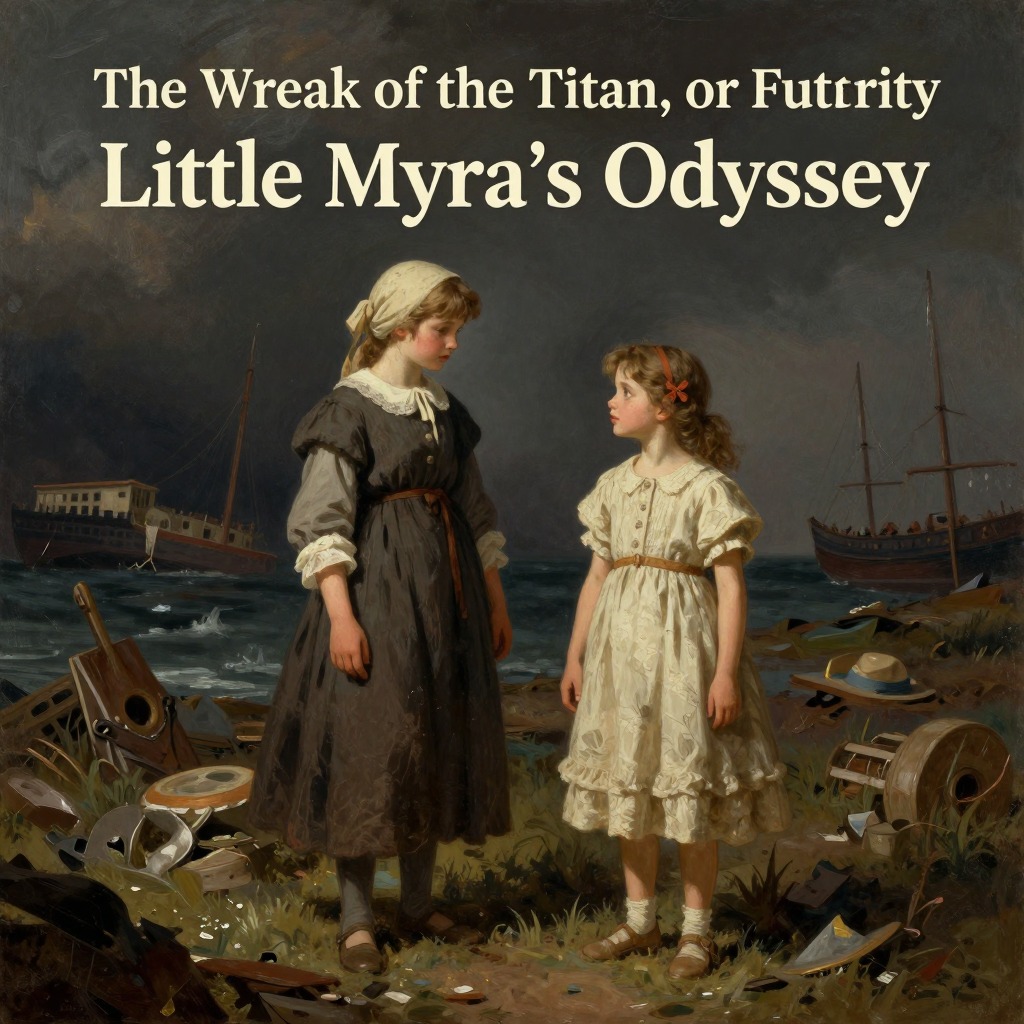
The incident takes place on the morning after the Titan's collision with the Royal Age, when Rowland, working as a common sailor, is scrubbing the white paint on the starboard taffrail, screened from view by the after deck-house. A little girl runs into the enclosure, laughing and screaming, and clings to his legs, saying she has "wunned 'way" from her mamma. Rowland, drying his wet hands on his trousers, lifts the tot and speaks tenderly, warning her she is in bad company. In a jesting menace that only a bachelor would attempt, he holds her above the rail and asks, "Shall I drop you over to the fishes, baby?" The child gives a little scream of fright, and at that instant Myra appears around the corner. She springs toward him like a tigress, snatches the child, stares at him for a moment with dilated eyes, and then disappears. The look she gives him is the mother-look, and it leaves Rowland breathing hard, his face as near the color of the paint he was scrubbing as a tanned sailor's skin may become.
The Look as Revelation and Turning Point
For Rowland, the mother-look is a revelation that cuts deeper than any word. He groans, "It is her child. That was the mother-look. She is married --- married." The look confirms what he had already suspected but had not fully confronted: the woman he loved, whose rejection had driven him to drink and disgrace, now belongs to another man and to a child. The narrative emphasizes the physical and emotional impact of this recognition, describing how Rowland resumes his work with a face drained of color, his heart still pounding. The mother-look thus functions as a kind of visual proof, a moment of clarity that reorders his world and sets the stage for his later actions. It is also a moment of dramatic irony, for the reader knows that Myra's fear of Rowland, which she will later voice to the captain, is based on a misunderstanding of his intentions, and that the mother-look, which she intends as a warning, will ultimately bind him to her child's safety.
The Look's Echo in the Narrative's Structure
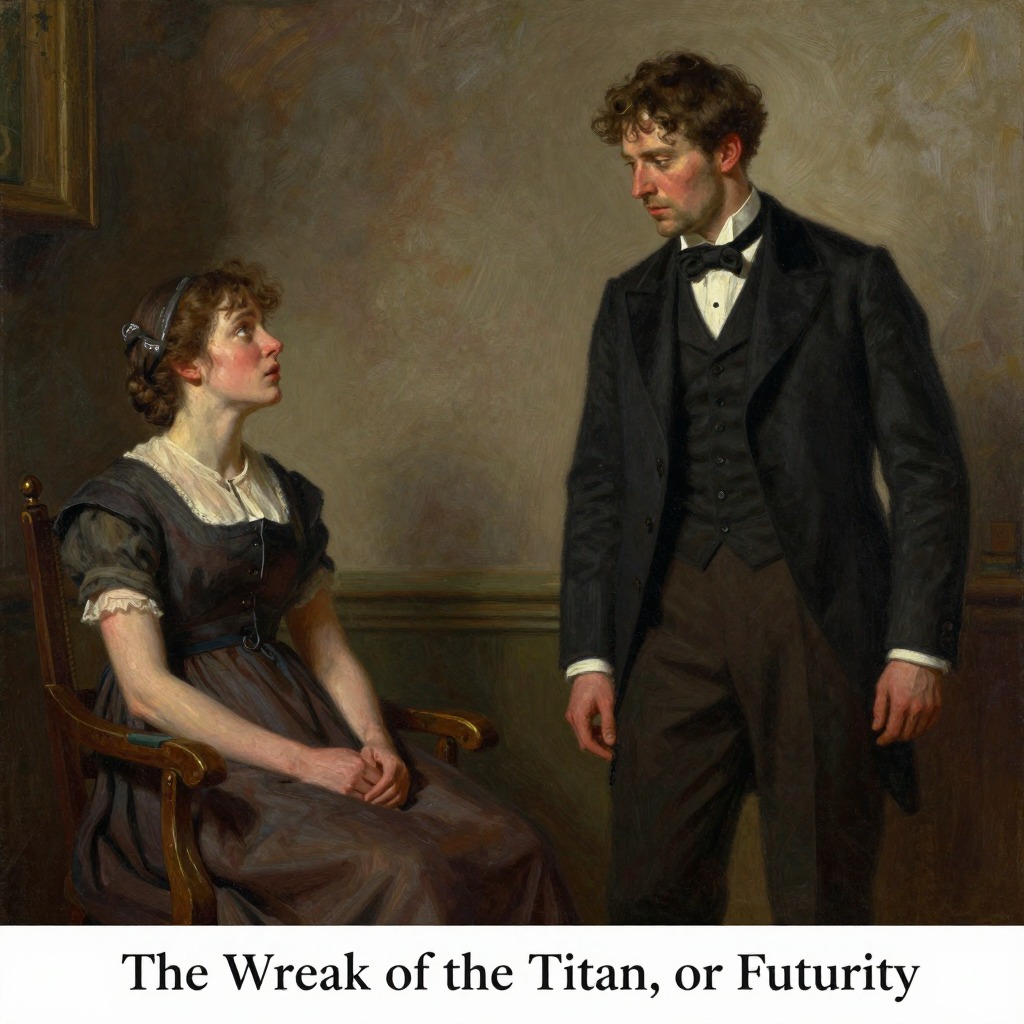
The mother-look is not an isolated moment but a motif that reverberates through the novella. It is echoed in the captain's later conversation with Myra and her husband, George Selfridge, when she describes Rowland's "frightful leer" and accuses him of attempting to murder the child. The captain, who has already learned of Rowland's past as a disgraced naval officer, listens gravely and offers to put him in irons for attempted murder, a charge Myra eagerly agrees to support. The mother-look thus becomes the seed of a false accusation that nearly destroys Rowland, even as it also foreshadows the truth of his heroic rescue of the child from the iceberg and the polar bear. The narrative's use of the mother-look as both a moment of personal anguish and a plot device highlights the tension between appearance and reality, and between the protective instincts of a mother and the actual character of the man she fears.
The Look's Transformation into Care
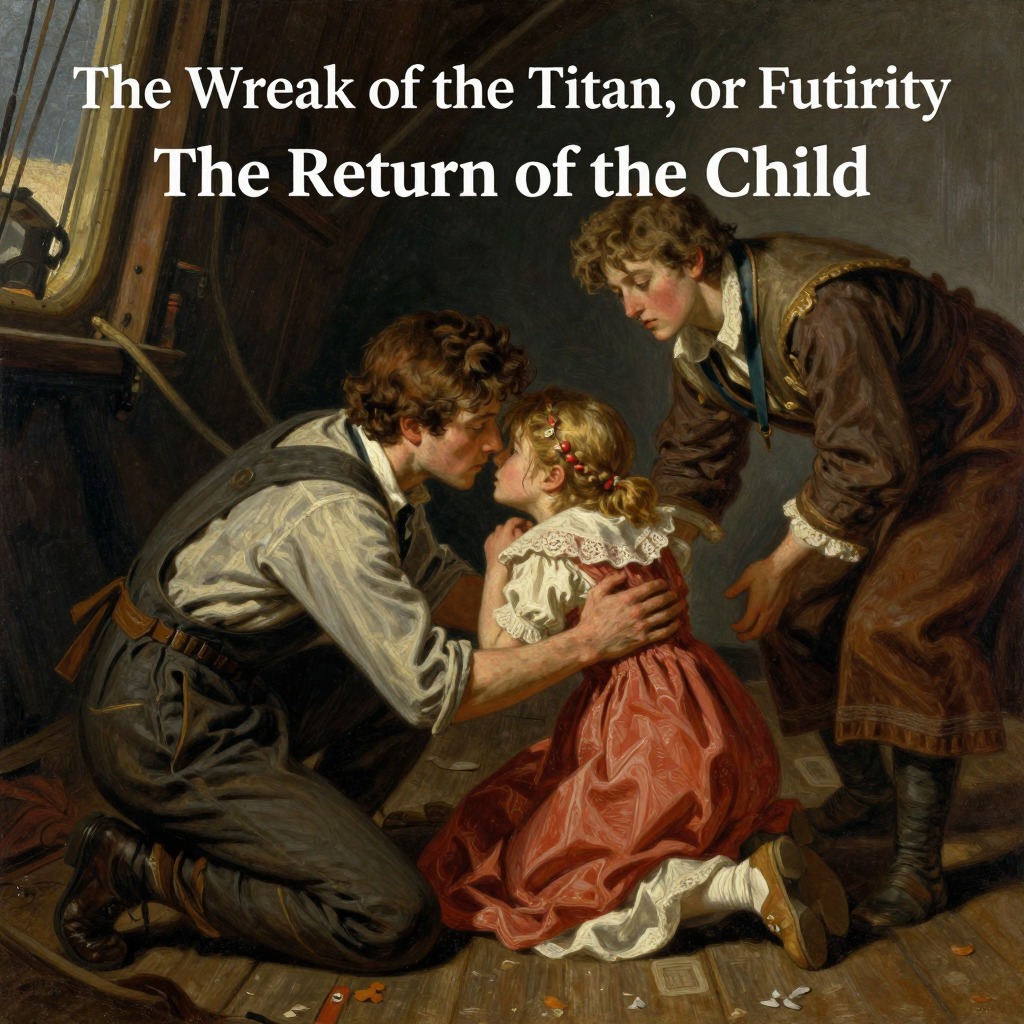
As the story progresses, the mother-look undergoes a subtle transformation in Rowland's memory and in the narrative's emotional logic. When he is stranded on the iceberg with the child, he recalls the mother-look and the woman's voice, and his thoughts turn from his own suffering to the child's needs. He wraps the little girl in his coat, fights and kills a polar bear to defend her, and prays for her safety and for the mother's, even as he denies the God to whom he prays. The mother-look, which had once signaled his exclusion from Myra's life, now becomes the emblem of his selfless devotion to her child. In the end, when he returns the child to her mother in New York, the mother-look is replaced by a different gaze: Myra, pale and hollow-eyed but happy-faced, allows no wandering glance to rest on him, and the child, who has learned to call him "Dammy," screams for him as he is dragged away by a policeman. The mother-look thus gives way to a more complex bond, one that the narrative suggests is more enduring than the romantic love that once consumed him.
The Mother-Look as Thematic Key
The mother-look is central to the novella's exploration of love, loss, and redemption. It represents the moment when Rowland's unrequited love is confronted with the reality of Myra's life, and it forces him to redefine his own identity. The look is also a marker of the narrative's shifting focalization: it is seen through Rowland's eyes, and its emotional weight is filtered through his consciousness, even as the narrator reports Myra's actions and expressions. This focalization invites the reader to share Rowland's anguish and to understand the depth of his transformation. The mother-look, in its intensity and its consequences, is thus not merely a facial expression but a narrative device that crystallizes the central conflict of the story and points toward its resolution in Rowland's selfless care for the child.